
Solar Financing & Incentives in Texas: What You Need to Know
Talk with a licensed North Texas solar installer about financing and incentives. Bryan can walk you through available tax credits, Texas property tax exemptions, and solar loan options. No pressure, no upsell.
If you’re looking into solar financing in Texas, you’re probably asking the same question most homeowners do: how do I pay for solar without overcomplicating it or overpaying?
The good news is there are several ways to make solar affordable, and when you combine financing with available incentives, the numbers can make a lot of sense for your home.
This page breaks it all down in plain terms. We’ll walk through your solar financing options, explain the real incentives available in Texas, and show you how everything fits together so you can make a confident decision.
See What Solar Financing Options Are Available for Your Home
Making Solar Affordable: Your Financing Options
There isn’t just one way to pay for solar. The right choice depends on your budget, your goals, and how long you plan to stay in your home.
Most homeowners exploring solar panel financing options choose between a loan, a lease, or a power purchase agreement.
If you’re comparing solar financing options or trying to figure out how to pay for solar, here’s a simple breakdown.
Solar Loans
A solar loan works a lot like a home improvement loan. You finance the system, make monthly payments, and own the system once it is paid off. You finance the system, make monthly payments, and own the system once it’s paid off.
Here’s why many people go this route:
- You own the system and all the long-term value
- You qualify for the federal tax credit and Texas incentives
- You can often match your loan payment to your current utility bill
- No large upfront payment required
A solar loan is usually best for homeowners who want the financial benefits of ownership but prefer to spread the cost over time. Terms and rates vary by lender, but most offer flexible options.
If you own a business, financing can work differently. Commercial systems may qualify for additional tax advantages. Learn more about
commercial solar in North Texas.
Solar Leases & Power Purchase
Agreements (PPAs)
Leases and PPAs are different because you don’t own the system.
- Solar Lease: You pay a fixed monthly amount to use the system
- PPA: You pay for the electricity the system produces
These options usually require little to no upfront cost, which can sound appealing. But there are trade-offs:
- You do not qualify for the federal tax credit
- You don’t benefit from increased home value
- Long-term savings are typically lower
Leases and PPAs can work for some homeowners, but if your goal is long-term savings and control, ownership through a loan or cash purchase usually makes more sense.
Federal Solar Tax Credit (ITC) — 30% in 2026
One of the biggest reasons solar has become more financially practical for homeowners is the 30% federal solar tax credit.
For many families, this incentive dramatically reduces the real cost of going solar and shortens the timeline for long term savings.
The federal solar tax credit may allow eligible homeowners to apply a percentage of qualified solar installation costs toward their federal income taxes.
That includes solar panels, inverters, labor, permitting, and battery storage when installed as part of the system.
On a larger residential installation, the savings can represent several thousand dollars returned through tax credits.
Here’s what matters:
- The credit equals 30% of your total system cost
- It reduces what you owe in federal income taxes
- Unused portions can typically roll over into future tax years if needed
For many homeowners, the ITC significantly changes the financial equation.
A system that may initially seem out of reach becomes much more affordable once federal incentives are factored into the final numbers.
Combined with Texas sales tax and property tax exemptions, the overall reduction in effective system cost can be substantial.
If you’re trying to estimate your total cost before incentives, start with this guide: solar panel costs in Texas.
The federal solar tax credit remains one of the most valuable solar incentives currently available, but eligibility depends on your tax situation. Because eligibility depends on individual tax situations, it is still important to review details with a qualified tax professional.
Texas-Specific Solar Incentives
While Texas does not offer a state income tax credit for solar, homeowners can still take advantage of several valuable solar incentives available to Texas residents to reduce overall installation costs and improve long term savings.
One of the biggest benefits is the Texas sales tax exemption on eligible solar equipment.
Because solar systems are exempt from state sales tax, homeowners avoid paying additional taxes on panels, inverters, mounting hardware, and related components.
On a typical residential solar installation, that can translate into thousands of dollars in immediate savings before federal incentives are even applied.
Texas homeowners may also qualify for the state’s property tax exemption for solar systems. While solar panels can increase home value, the added value from the system is excluded from property tax assessments. That means homeowners can benefit from higher resale value without increasing their annual property taxes.
Combined with federal solar incentives, these Texas specific exemptions can significantly lower the effective cost of going solar and improve long term return on investment.
For a deeper breakdown, visit: Texas solar incentives and tax credits
Texas Property Tax Exemption
The Texas property tax exemption solar benefit means that the added value your solar system brings to your home is not taxed.
Normally, when you improve your home, your property taxes can increase. With solar in Texas, that added value is excluded from your tax assessment.
This is one of the most straightforward solar incentives available to Texas homeowners, and it can save you money year after year.
Texas Sales Tax Exemption
Texas also offers a sales tax exemption on solar equipment.
That means you do not pay state sales tax on the cost of your solar system, which can reduce your upfront cost significantly.
When combined with the Texas property tax exemption solar benefit and the federal tax credit, these incentives help lower the real cost of going solar.
How Solar + Battery Storage Impacts Your Savings
Adding battery storage to your solar system can change how — and when — you use your energy. Instead of sending excess power back to the grid, battery systems allow you to store it for later use.
Benefits include:
- Backup power during outages
- Greater energy independence
- Better control over when your solar energy is used
We’ll help you decide whether battery storage makes sense for your goals and explain how it affects system cost and long-term value. Learn more on our battery storage solutions page.
Not Sure What Incentives Apply to Your Home?
Every homeowner's situation is different. We'll walk you through the federal tax credit, Texas property tax exemption, and your financing options clearly and without pressure. Get a free estimate and we'll show you the actual numbers for your home.
Get honest solar pricing before you sign anything. We will show you what your system costs after incentives and what your monthly payment could look like. Free estimate, no obligation.
Net Metering in Texas — What You Should Know
A lot of homeowners ask about net metering in Texas, and it’s important to be clear here.
Texas does not have a statewide net metering mandate.
Instead, policies vary depending on your utility or electricity provider, especially in deregulated areas within ERCOT. Some providers offer buyback programs, while others do not.
That does not mean solar isn’t worth it. It just means your system should be designed with your usage in mind.
Here’s how homeowners work around this:
- Size the system to match your energy use
- Use more energy during solar production hours
- Add battery storage to store excess energy
Understanding your local setup is part of every consultation we provide, so you know exactly what to expect.
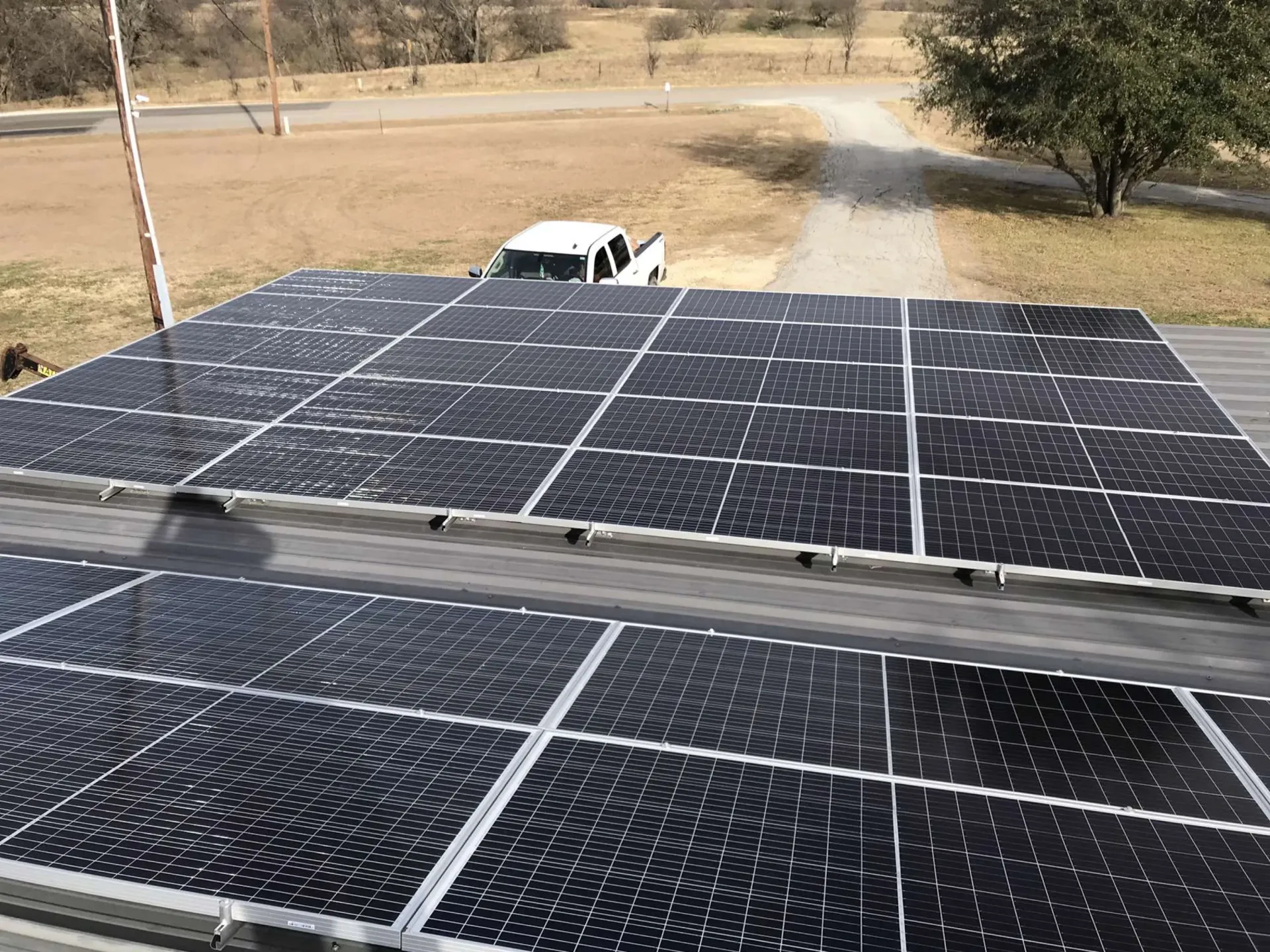
Solar + Battery Storage and Your Financial Return
Adding battery storage changes both how your solar system operates and how you capture long term value from it. Instead of relying entirely on utility buyback programs, a battery allows you to store and use more of the energy your system generates.
With a solar + battery setup:
- You can store excess solar energy instead of sending it to the grid
- You have backup power during outages
- You gain more control over when and how you use electricity
This becomes especially important in Texas, where net metering policies and solar buyback rates vary by utility provider. In some areas, excess power sent back to the grid is credited at a lower rate than the electricity you purchase from the utility.
Battery storage helps close that gap by allowing you to use your stored solar energy later in the day when utility rates are higher or solar production drops.
For many homeowners, battery storage improves energy independence and increases the percentage of solar power they actually use themselves.
That can lead to stronger long term savings, better protection from rising electricity costs, and more predictable energy expenses over time.
If you want to explore this option, take a look at our
battery storage solutions.
Many homeowners considering solar financing options in Texas choose to include a battery in their loan so everything is covered in one payment.
What Integrity Solar USA Customers Are Saying
We take a straightforward approach to solar. No pressure, no inflated projections, just clear numbers and honest guidance.
Why homeowners choose us:
- We explain every financing option clearly so you can decide what fits your budget
- The 30% federal tax credit can significantly reduce your net cost
- Texas homeowners pay no added property taxes on solar value
- We show real numbers based on your home’s energy usage
- We’ve helped North Texas homeowners navigate solar incentives for years
Trust Indicators:
- Licensed & Insured — Texas License #37666
- Owner-led projects from consultation to installation
- Serving Wise and Montague County and surrounding areas
- Honest, transparent pricing
- Certified installer for Tesla Powerwall and Enphase systems
- Available Monday through Saturday
★★★★★ Crissy T · Google Review · ★★★★★
“Bryan will help you with every step of the process. Ive had my panels for couple of years now and any time I have a question he's always quick to respond and do everything he can to help me save money on my solar.”
★★★★★ Gene Potter · Google Review · ★★★★★
“Fast, professional service. Helped me reroute main service to combine two meters and solar into a single service at no additional charge. Great customer service!!”
Frequently Asked Questions About Solar Financing & Incentives
Ready to See What Solar Financing Looks Like for Your Home?
We’ll walk you through your solar financing in Texas options, explain which incentives apply to your home, and provide a realistic breakdown of projected costs, savings, and system performance based on your actual energy usage.
Whether you are still comparing options or ready to move forward, the goal is simple: give you clear information so you can make a confident decision without pressure or sales tactics.
